
How to Prep Vegetables for the Week
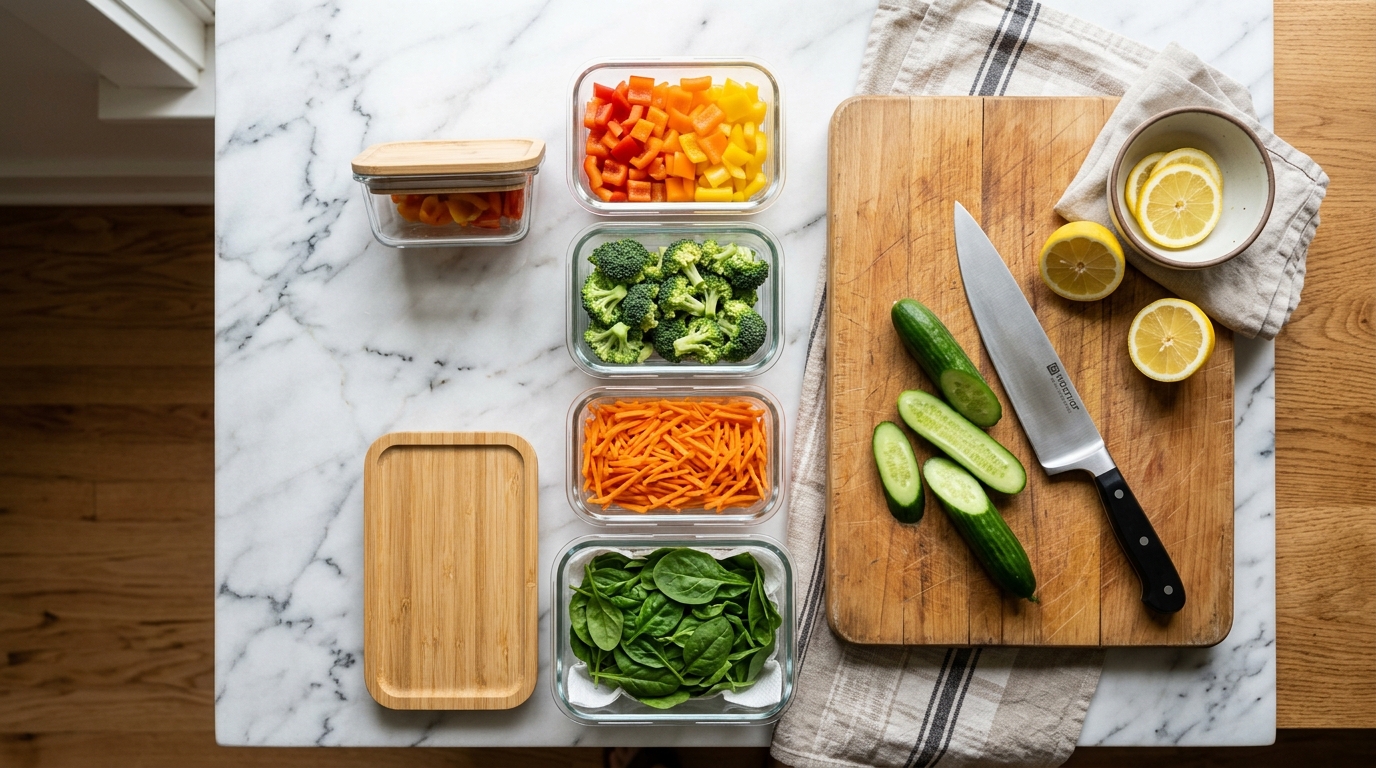
Weekly vegetable prep works best when you wash, dry, and cut only the vegetables that hold their structure after slicing, and keep them refrigerated in clean containers with moisture strictly controlled. Rather than chopping an entire grocery haul at once, focusing your prep on sturdy produce while leaving delicate items whole prevents ingredients from turning soft, watery, or slimy before you have a chance to cook them.
Whether you are streamlining fast morning scrambles, packing crisp workday wraps, or assembling 15-minute skillet dinners, this guide provides a practical, food-safe method to keep prepped vegetables fresh, crisp, and ready all week long.
Why Prep Vegetables Ahead?
Dedicating 30 to 45 minutes to prepping foundational vegetables transforms weekday mealtime from a high-friction chore into an easy assembly process. When vegetables are already washed, trimmed, and diced, the barrier to cooking fresh meals virtually disappears.
- Cuts cooking time in half: Having pre-diced aromatics and washed greens ready turns a 40-minute recipe into a 15-minute skillet meal.
- Streamlines morning and midday routines: Toss pre-chopped peppers directly into a skillet or pack a crunchy wrap without pulling out a cutting board before work.
- Eliminates repetitive cleanup: Wash, peel, and chop your produce in one focused session rather than washing knives and cutting boards three times a day.
- Increases produce visibility: Storing colorful, prepped vegetables at eye level in the refrigerator ensures they get eaten before spoiling.
Step 1 — Choose Vegetables That Prep Well
Hardy vs. Delicate Produce
Not all vegetables behave the same way once sliced. Dense vegetables with low water activity maintain their cellular integrity for days, while high-moisture or enzymatically active vegetables deteriorate quickly once their protective skins are breached.
To make your weekly vegetable prep successful, divide your produce into sturdy candidates suitable for early batch prep and delicate items that require minimal handling or day-of slicing.
- Sturdy Candidates for Early Prep (3 to 5 days): Carrots, celery, bell peppers, broccoli florets, cauliflower, red and green cabbage, radishes, and hearty kale.
- Delicate Produce That Needs Care (1 to 2 days or Day-Of): Cucumbers, whole tomatoes, zucchini, fresh mushrooms, and tender baby spinach or arugula.
Step 2 — Wash Vegetables Properly
Proper washing removes surface soil, bacteria, and residual orchard dust. Always wash produce under clean, running cold tap water. For firm vegetables like carrots, bell peppers, and celery, use gentle friction with clean hands or a dedicated clean produce brush.
Food safety guidelines from the USDA and FDA strongly advise against using dish soap, bleach, detergents, or commercial produce washes. Fresh produce has porous surfaces that can absorb chemical residues, which can cause digestive irritation and alter the natural flavor of the food.
Timing also matters: wash sturdy vegetables prior to cutting, but hold off on washing delicate items like mushrooms or fresh berries until immediately before you plan to eat or cook them.
Step 3 — Dry Everything Thoroughly (The Secret to Longevity)
If prepped vegetables turn slimy or limp in your refrigerator, excess surface moisture is almost always the culprit. Water droplets trapped inside closed containers create a humid microclimate that accelerates cellular breakdown and bacterial decay.
Complete drying is the single most critical step in make-ahead vegetable prep. Use these three reliable methods to eliminate residual moisture before storing:
- The Salad Spinner: Essential for leafy greens, fresh herbs, and chopped kale. Spin twice, pour off the standing water in the outer bowl, and gently fluff the leaves.
- Clean Lint-Free Kitchen Towels: Spread washed bell peppers, broccoli florets, and celery sticks in a single layer on a clean towel for 10 to 15 minutes to allow ambient evaporation.
- The Absorbent Liner Technique: Place a clean paper towel (or dry unbleached cloth) at the bottom or top of storage containers to absorb condensation that forms under refrigeration.
Step 4 — Cut Vegetables According to Their Use
Matching Shape to Recipe Intent
How you cut your vegetables should directly reflect the recipes you plan to make during the week. Uniform knife cuts ensure even cooking and seamless assembly.
- Strips & Batons (Julienne): Slice bell peppers and carrots into 2-inch matchsticks for crunchy lunch wraps, midday dipping, and fast wok stir-fries.
- Fine Dice (Brunoise): Dice red onions and sweet bell peppers into uniform 1/4-inch cubes for instant morning scrambles like Tofu Scramble with Vegetables, savory Vegetable Besan Chilla, and grain bowls.
- Bite-Sized Florets: Cut broccoli and cauliflower into compact, even clusters for sheet-pan roasting, steaming, or simmering in curries.
- Thin Shaves: Shred red cabbage and radishes on a mandoline or with a chef's knife for durable slaws that hold their crunch all week.
Step 5 — Store Prepped Vegetables Correctly
Once chopped and dried, keep your prepped vegetables stored at 40°F (4°C) or below in your refrigerator. Maintaining consistent cooling slows natural enzymatic breakdown and keeps produce crisp.
Use airtight glass or food-safe BPA-free plastic containers with tight silicone seals. Keep pungent aromatics like chopped red or yellow onions in dedicated, tightly sealed containers to prevent sulfury aromas from transferring to nearby dairy or sensitive greens.
Additionally, keep ethylene-producing produce (such as ripe apples, bananas, and room-temperature tomatoes) separate from ethylene-sensitive vegetables like broccoli, carrots, and leafy greens, which yellow and spoil quickly in the presence of ethylene gas.
Vegetable-Specific Storage & Freshness Guide
Use this reference table to determine the best prep methods, container types, and factual refrigerator storage timeframes based on postharvest extension guidelines (refrigerated at or below 40°F / 4°C):
| Vegetable | Prep Ahead? | Best Cut Style | Storage Method | Key Texture Tip | Safe Refrigeration* |
|---|---|---|---|---|---|
| Carrots | Yes | Sticks, coins, or fine dice | Airtight container with dry paper towel | Peel completely; keep dry to avoid surface stickiness | 4 to 5 Days |
| Bell Peppers | Yes | Strips or 1/4-inch dice | Airtight container lined with paper towel | Remove all white inner membranes and seeds | 4 to 5 Days |
| Broccoli & Cauliflower | Yes | Bite-sized florets | Airtight container or perforated bag | Ensure florets are 100% dry before closing container | 4 to 5 Days |
| Celery | Yes | Sticks or small dice | Airtight glass container with towel liner | Store away from cold back wall to prevent frost damage | 4 to 5 Days |
| Leafy Greens (Spinach/Kale) | Yes (Washed/Spun) | Whole leaves or chopped | High-sided container with towel sandwich | Do not pack tightly; leaves need light air circulation | 4 to 5 Days |
| Cabbage (Red/Green) | Yes | Shredded or quarter wedges | Sealed container or tightly wrapped | Exceptionally durable; maintains crisp crunch for days | 5 to 7 Days |
| Cucumbers | 1–2 Days Only | Thick rounds or spears | Airtight container with absorbent liner | Never salt before storing; slice close to consumption | 1 to 2 Days |
| Zucchini & Squash | 1–2 Days Only | Thick half-moons or ribbons | Airtight container lined with paper towel | Releases moisture after cutting; best cooked within 48h | 2 Days |
| Onions (Red/Yellow) | Yes | Diced or sliced | Heavy-duty sealed glass container | Isolate completely to prevent odor transfer to dairy | 3 to 4 Days |
| Fresh Mushrooms | No (Keep Whole) | Slice day of cooking | Breathable brown paper bag | Never wash in advance; moisture causes instant sliminess | Slice Day of Use |
Step 6 — Keep Leafy Greens Crisp and Dry
Tender greens like baby spinach, arugula, and mixed lettuces require special attention because their delicate cell walls break down rapidly under standing water. When stored in saturated plastic bags, greens begin to rot within 48 hours.
To keep greens crisp for 4 to 5 days, use the 'Towel Sandwich' technique: wash and thoroughly spin your greens dry in a salad spinner. Line a wide, flat storage container with a clean paper towel, place the dry greens loosely inside without compacting them, and lay a second paper towel over the top before snapping the lid closed. The towels will continuously absorb excess condensation while keeping the humidity level optimal.
Step 7 — Handle Cucumbers and High-Moisture Produce Carefully
Cucumbers and summer squashes are composed of over 95% water. The moment their outer skin is sliced, cellular turgor pressure drops, and water begins weeping from the flesh. If left in a sealed container with salt or acidic dressings, sliced cucumbers quickly turn limp and mushy.
For recipes that feature crisp raw cucumbers—such as our Tuna Cucumber Salad (No Mayo)—it is best to prep your companion aromatics (like diced red onions, herbs, and lemon dressing) in advance, and slice the fresh Persian or English cucumbers directly into the bowl just before serving. If you must prep cucumbers ahead, cut them into thicker rounds, leave the seeds intact only on firm varieties, and store them with a dry absorbent towel for no more than 24 to 48 hours.
Step 8 — Prep Vegetables Based on Your Weekly Plan
Vegetable prep is most effective when it connects directly to your overarching weekly meal schedule. Rather than chopping random produce and hoping it gets used, review your meal plan first to identify shared ingredients.
If you are planning meals using our foundational guide on how to plan meals for the week, use this 4-step prep workflow:
- Audit your planned recipes: Check your 4 to 5 core dinners and morning breakfast rotation.
- Identify overlapping vegetables: If bell peppers and onions appear in both a morning scramble and an evening stir-fry, chop the entire quantity in one session.
- Batch by cut style: Chop all diced vegetables on one board, then move to sliced vegetables and florets to minimize tool switching.
- Reserve delicate items: Keep mushrooms, ripe tomatoes, and fresh soft herbs whole until you cook.
Frequently Asked Questions
Here are quick, direct answers to common questions about weekly vegetable prep and fresh storage:
- Can you prep vegetables for the whole week? Yes for sturdy produce (carrots, bell peppers, celery, broccoli, and cabbage), which store crisply for 4 to 5 days when dry. High-moisture vegetables (cucumbers, zucchini, tomatoes) should only be prepped 1 to 2 days ahead or sliced day-of.
- Should vegetables be washed before storing? Sturdy vegetables and leafy greens can be washed ahead provided they are completely dried before storing. Delicate items like mushrooms and berries should only be washed immediately before cooking.
- How do you keep cut vegetables fresh? Keep them in airtight containers at 40°F (4°C) or colder, line containers with an absorbent paper towel to wick away moisture, and never add salt or dressings until serving.
- Which vegetables are best to prep ahead? Carrots, celery sticks, diced bell peppers, broccoli florets, cauliflower clusters, shredded cabbage, and washed/spun hearty greens.
- Why do prepped vegetables get slimy? Sliminess is caused by trapped surface moisture and bacterial breakdown. When vegetables sit in pooled water within unventilated containers, cellular decay accelerates rapidly.
Recipes to Pair with Your Weekly Prep
Put your prepped vegetables to work across these tested savory dishes and curated recipe collections: