
Which Vegetables Can You Chop Ahead of Time?
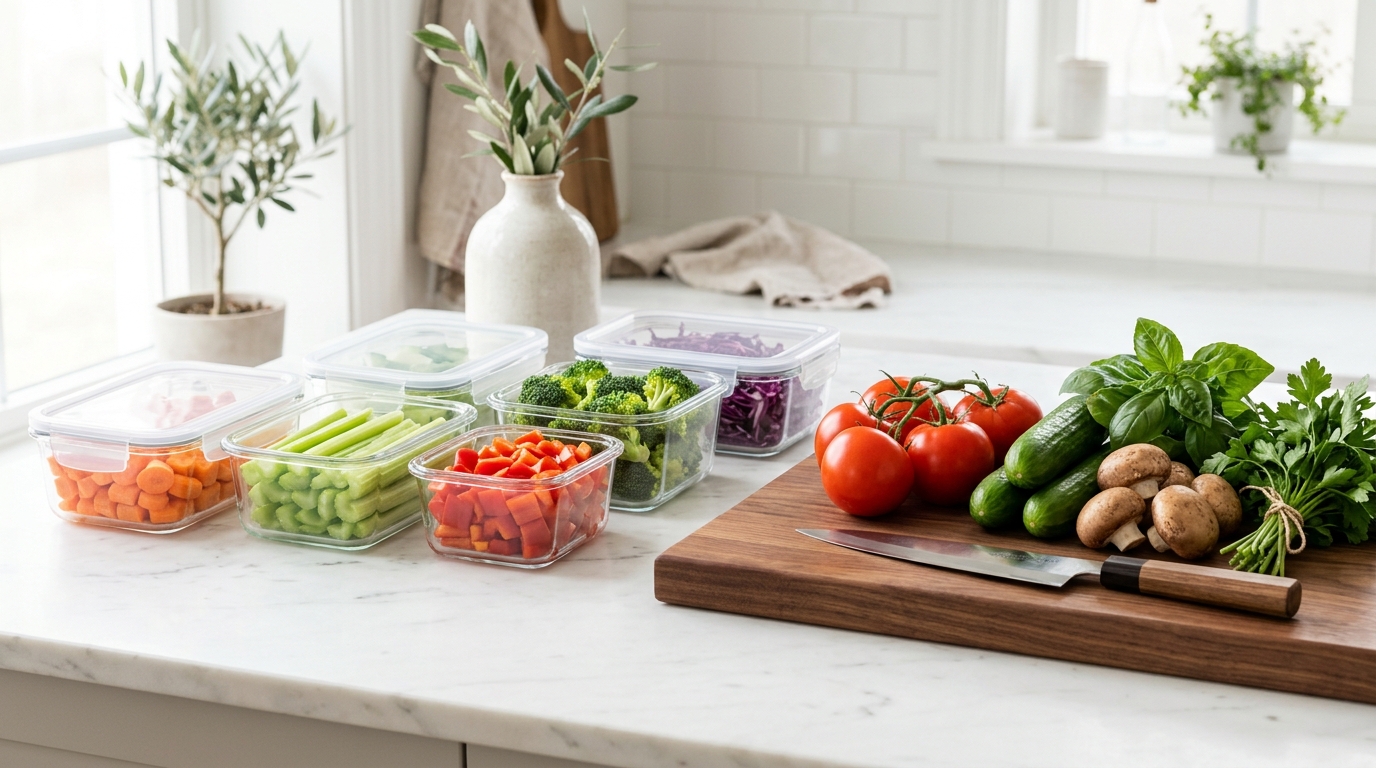
Sunday afternoon vegetable prep is one of the most effective kitchen habits you can build—until Wednesday arrives and your prepped cucumbers have dissolved into a watery mush, your diced potatoes have turned gray, and your pre-cut mushrooms look slick and slimy.
The hard truth about weekly meal prep is that a knife blade destroys plant cellular walls. Once skin is breached, enzymes react with oxygen, moisture escapes, and bacterial breakdown begins. However, hardy vegetables with rigid cellulose cell walls thrive when pre-chopped, staying crisp for nearly a full week. Knowing which vegetables belong on your Sunday cutting board—and which should stay whole until cooking night—is the difference between effortless 15-minute dinners and throwing money in the compost bin.
The Science: Why Some Veggies Keep and Others Spoil
Vegetables break down after cutting due to three primary biochemical triggers: moisture migration, enzymatic browning (polyphenol oxidase), and ethylene sensitivity.
High-water produce like tomatoes and cucumbers weep moisture the moment salt or oxygen touches them. In contrast, low-moisture root vegetables and brassicas possess dense, fibrous networks that retain their structure and turgor pressure as long as excess exterior condensation is controlled.
- Cellular Density: Sturdy vegetables (carrots, cabbage) resist wilting; watery fruits botanically classified as vegetables (cucumbers, tomatoes) weep liquid immediately.
- Oxidation Speed: Certain produce oxidizes in minutes when polyphenol oxidase meets ambient air (apples, potatoes, eggplant).
- Respiration Rate: Cut greens continue breathing post-harvest. Sealing them soaking wet in warm bags causes anaerobic suffocation and rapid decay.
The 5-Day All-Stars: Chop Ahead With Zero Crunch Loss
Safe to Prep 5 to 7 Days Ahead
These sturdy powerhouses are your Sunday prep foundation. You can wash, peel, dice, or slice them in bulk, pack them into sealed containers, and rely on them all week long for stir-fries, snack boxes, and sheet pan dinners.
- Carrots & Celery: The ultimate prep champions. Pre-cut batons or coins retain their bite for 5 to 7 days. Tip: Store prepped carrot and celery sticks submerged in clean cold water in the fridge for maximum crispness, changing the water every two days.
- Bell Peppers (All Colors): Once seeds and membranes are removed, diced or sliced peppers stay firm for 5 full days. Line your container with a dry paper towel to catch weeping drops.
- Broccoli & Cauliflower Florets: Cut into uniform bite-sized florets completely dry. They maintain firm stems for 5 to 6 days. Avoid washing until just before cooking or ensure they are 100% dry before refrigerating.
- Cabbage (Red, Green, Savoy): Whole cabbage heads oxidize at the cut edge, but shredded cabbage stays crisp for 5 to 7 days if packed tightly in an airtight glass jar.
- Radishes & Turnips: Trim the tops (greens pull moisture from roots), wash, and slice. They hold their peppery snap for up to 6 days.
The 3-Day Middle Ground: Chop Ahead With Storage Rules
Safe to Prep 2 to 3 Days Ahead
These vegetables save serious weeknight time, but their flavor, odor, or texture begins degrading after 72 hours. Prep these mid-week or plan to cook them by Tuesday or Wednesday night.
- Onions, Shallots & Garlic: Diced onions oxidize and produce harsh sulfur vapors. Store strictly in thick glass snap-lid jars (plastic will permanently absorb the smell and transfer it to the rest of your fridge). Use within 3 days.
- Brussels Sprouts: Halved or shaved sprouts begin browning along cut leaves after day three. Toss with a squeeze of lemon juice or cook within 72 hours.
- Hearty Kale & Collard Greens: De-stemmed, washed, and thoroughly spun-dry kale leaves can be chopped and stored up to 3 days with a paper towel liner.
- Green Beans & Asparagus: Snap off woody ends and rinse. Store upright in a wide-mouth jar with an inch of water at the base, covered loosely with a silicone bag, for 3 to 4 days.
The 'Skip' List: Vegetables You Should NOT Prep Too Early
Keep Whole Until 24 Hours or Day-Of Cooking
Do not waste your Sunday prepping these ingredients. Cutting them early ruins their culinary texture and accelerates spoilage.
- Tomatoes: Never chop tomatoes ahead. Once sliced, tomato cells collapse, seed gels turn acidic, and the flesh becomes mealy and waterlogged within hours. Furthermore, raw tomatoes should stay on the counter, not in the fridge.
- Cucumbers: Pre-sliced cucumbers bleed water relentlessly, leaving you with limp, slimy discs floating in cloudy liquid. Slice right before serving salads or snacks.
- Mushrooms: Mushrooms are porous fungi that behave like sponges. Slicing them days early causes them to darken, shrivel, and develop an unpleasant slimy film. Clean and slice immediately before hitting the pan.
- Zucchini & Yellow Summer Squash: Cut summer squash weeps moisture rapidly and turns rubbery within 24 to 36 hours. Best chopped the evening you roast or sauté.
- Potatoes & Sweet Potatoes: Exposed potato flesh turns gray or black within minutes due to enzymatic browning. (Exception: If peeling ahead, you must keep them completely submerged in a bowl of cold water in the fridge for up to 24 hours).
- Avocados: While technically a fruit, avocados turn brown rapidly when exposed to air. Slice fresh or use lemon/lime juice and plastic wrap pressed flush against the surface for short-term day-of prep.
The Tomato Rule
Master Chopped Vegetable Shelf-Life Matrix
Refer to this quick reference guide during your weekly grocery unpack and Sunday prep:
| Vegetable | Cut Shelf Life | Recommended Container | Key Moisture Hack |
|---|---|---|---|
| Carrots & Celery | 5–7 Days | Glass Jar (Water Submerged) | Change cold water every 48 hours |
| Bell Peppers | 5 Days | Airtight Glass Container | Line bottom with folded dry paper towel |
| Broccoli & Cauliflower | 5–6 Days | Vented or Snug Glass Box | Ensure florets are completely dry before chilling |
| Cabbage (Shredded) | 5–7 Days | Airtight Mason Jar | Pack tightly to minimize oxygen pockets |
| Onions & Garlic | 3 Days | Heavy Glass Jar with Gasket | Never store in porous plastic; prevents fridge odor |
| Kale & Sturdy Greens | 3–4 Days | Large Glass/Silicone Bag | Spin dry thoroughly; wrap in cloth or paper towel |
| Asparagus (Trimmed) | 3–4 Days | Upright Glass Jar | Stand upright in 1 inch of water like cut flowers |
| Cucumbers & Zucchini | 1 Day Max | Do Not Prep Early | Slice fresh right before serving |
| Fresh Mushrooms | 1 Day Max | Paper Bag (Whole) | Store whole in breathable paper bag; slice day-of |
The 3 Golden Rules to Keep Cut Produce Fresh
Follow these three universal handling rules to double the longevity of everything in your crisper drawer:
- Rule 1 — Absolute Dryness is Non-Negotiable: Moisture is the primary catalyst for bacterial rot. If you wash produce before chopping, let it air-dry completely on clean towels or use a salad spinner before sealing.
- Rule 2 — The Paper Towel Buffer: Place a folded paper towel or clean cotton cloth inside every prepped vegetable container. It absorbs natural plant perspiration while maintaining optimal ambient humidity.
- Rule 3 — Use Heavy Glass Containers: Glass does not absorb food odors, maintains colder temperatures when the fridge door opens, and creates a superior airtight seal compared to flexible plastic bags.
Emergency Hack: How to Revive Limp Prepped Vegetables
If your pre-cut celery, carrots, radishes, or broccoli florets have lost their snap by Thursday, do not throw them away! Plant cells become limp when they lose internal water pressure (turgor).
Submerge the wilted pieces in a large bowl of ice water for 20 to 30 minutes. The cells will naturally absorb moisture through capillary action, restoring that crisp, fresh-cut crunch like magic.
Recipes to Pair with Your Weekly Prep
Put your prepped vegetables to work across these tested savory dishes and curated recipe collections: