
How to Blanch and Freeze Vegetables for Meal Prep
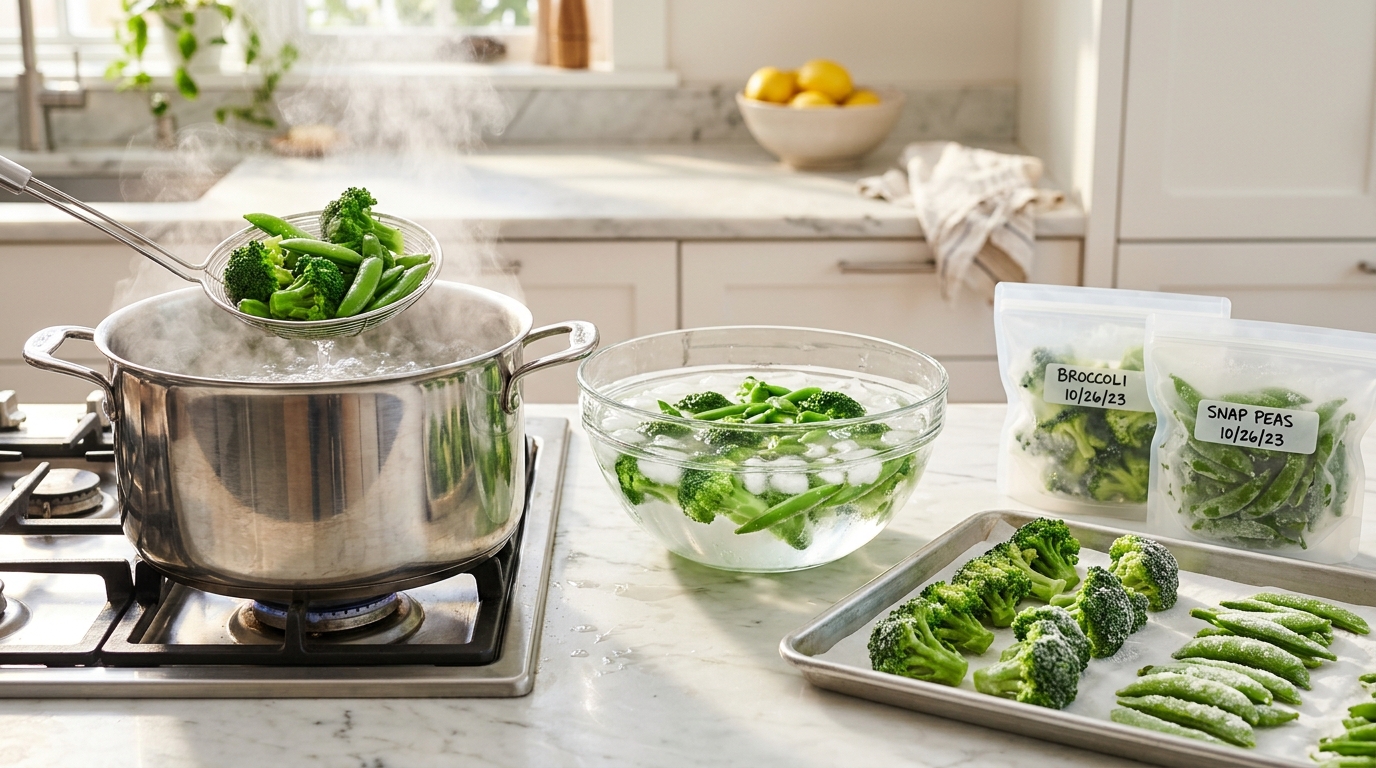
Buying fresh seasonal produce in bulk or taking advantage of farmers' market sales is one of the smartest ways to save money on groceries. But when life gets busy, crisp vegetables in your crisper drawer can quickly soften, discolor, and spoil before you have a chance to cook them.
Freezing fresh vegetables raw rarely works: natural plant enzymes continue breaking down flavor, vitamins, and cellular walls even at sub-zero temperatures, leaving you with dull, rubbery produce upon thawing. Blanching—the simple technique of scalding vegetables in boiling water or steam for a strictly timed interval before immediately chilling them in an ice water bath—deactivates these decay enzymes, stabilizes color pigments, and preserves essential nutrients for up to a full year.
The Science: Why Freezing Raw Vegetables Fails
Fresh vegetables are biologically active organisms packed with metabolic enzymes (specifically catalase and peroxidase). If you toss raw green beans or broccoli directly into a freezer bag, these enzymes continue working, oxidizing cell walls, degrading vitamins A and C, and developing off-flavors.
A brief plunge into 212°F (100°C) boiling water denatures these proteins, halting chemical deterioration in its tracks while sanitizing the exterior surface of wild bacteria and dirt.
- Halts enzymatic breakdown: Destroys the active enzymes that cause textural degradation and sour odors.
- Locks in vibrant chlorophyll: Brightens dull green produce into vibrant emerald colors that stay photogenic.
- Softens tough fibers: Relaxes rigid plant cellulose just enough so vegetables pack tightly into containers without breaking.
- Cleanses surface microbes: Significantly reduces ambient bacteria and yeasts before cold storage.
The 4-Step Blanch and Freeze Workflow
Follow this dependable commercial-kitchen protocol for flawless results every time:
- Step 1 — Rolling Boil: Bring at least 1 gallon of water per pound of prepared vegetables to a vigorous rolling boil in a large stockpot. Ample water volume ensures the water returns to a boil within 60 seconds of adding cold vegetables.
- Step 2 — Timed Scald: Submerge vegetables using a wire blanching basket or spider strainer. Start timing the exact moment the water resumes boiling.
- Step 3 — Ice Water Shock: Transfer immediately into an equal-sized bowl filled with cold water and abundant ice cubes. Keep produce in the ice bath for the exact same amount of time it spent in the boiling water to stop carryover cooking.
- Step 4 — Thorough Drying: Drain vegetables thoroughly and lay them flat on clean lint-free kitchen towels. Surface water turns into sharp ice crystals that pierce cell walls during freezing.
The Flash-Freeze Secret: Preventing the 'Ice Block'
Never pour freshly chilled, damp vegetables straight into a freezer bag! If you do, gravity and freezing moisture will fuse all your vegetables into a single giant, unmanageable ice block.
Instead, arrange dried blanched vegetables in a single layer on a parchment-lined baking sheet, making sure pieces do not touch. Place the baking sheet into your freezer for 1 to 2 hours until pieces are frozen solid (known as 'IQF' or individually quick frozen). Once solid, scrape them into your labeled freezer bag. You can now scoop out a single cup of loose broccoli florets or snap peas whenever dinner calls without thawing the entire package.
Master Vegetable Blanching Time Guide
Timing is everything: under-blanching stimulates enzymes more than leaving produce raw, while over-blanching cooks out flavors and leaves vegetables limp.
| Vegetable | Prep Style | Blanching Time | Ice Bath Time | Freezer Shelf Life |
|---|---|---|---|---|
| Broccoli Florets | 1.5-inch pieces | 3 Minutes | 3 Minutes | 10–12 Months |
| Cauliflower | Bite-sized florets | 3 Minutes | 3 Minutes | 10–12 Months |
| Green Beans | Ends trimmed | 3 Minutes | 3 Minutes | 10–12 Months |
| Carrots (Sliced) | 1/4-inch coins | 2–3 Minutes | 3 Minutes | 10–12 Months |
| Baby Spinach & Greens | Whole leaves | 90 Seconds | 2 Minutes | 8–10 Months |
| Asparagus | Medium stalks | 2–3 Minutes | 3 Minutes | 8–10 Months |
| Brussels Sprouts | Medium heads | 4 Minutes | 4 Minutes | 12 Months |
| Zucchini / Squash | 1/2-inch slices | 2 Minutes | 2 Minutes | 8 Months |
Exceptions: Which Vegetables Can You Freeze RAW?
Not every vegetable requires boiling water! Certain aromatics and low-fiber ingredients have low enzymatic activity and can skip blanching entirely:
- Bell Peppers & Hot Peppers: Simply wash, core, slice into strips or dice, dry, and flash-freeze raw. They stay firm enough for fajitas and stir-fries for up to 8 months.
- Onions & Shallots: Dice finely and freeze raw in airtight glass jars or vacuum bags. Toss directly into hot oil for sautés.
- Fresh Herbs in Oil: Chop rosemary, thyme, or oregano, pack into ice cube trays, and cover with olive oil. Pop out flavor bombs directly into soup pots.
Cooking from Frozen Tip
Recipes to Pair with Your Weekly Prep
Put your prepped vegetables to work across these tested savory dishes and curated recipe collections: